
Industry: In Flaviac, a successful integration model built on support and skills development
Reading : 3 minutes
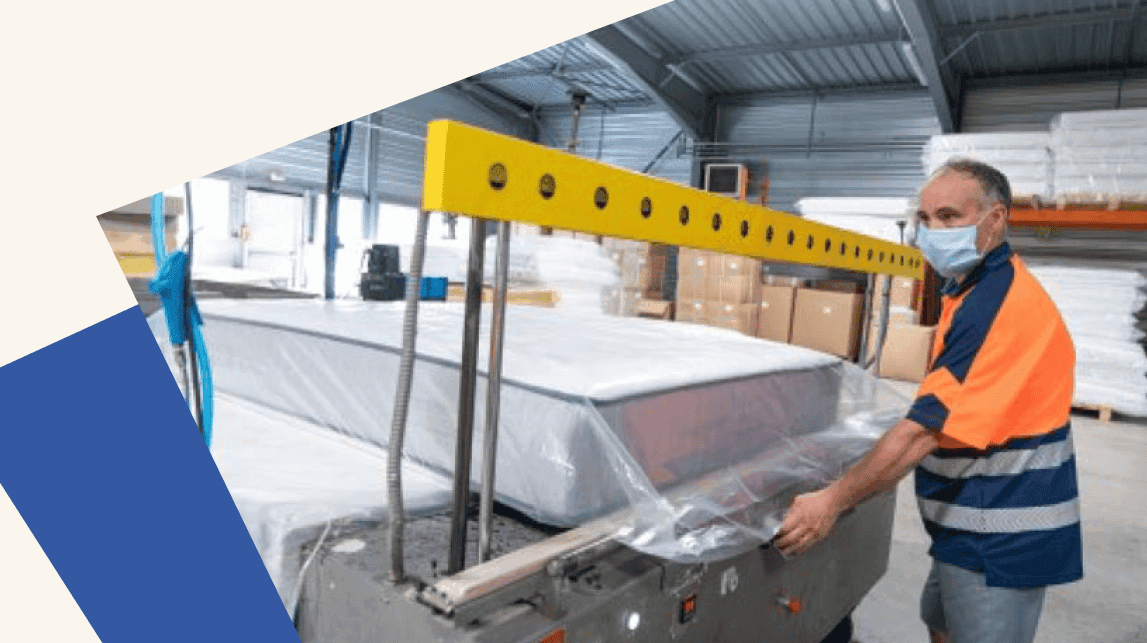
At the “Les entreprises s’engagent” (“Businesses Commit”) event organized by the Ardèche Chamber of Commerce and Industry (CCI) on April 28 in Privas, Ardèche, Christelle Bonnet-Chrétien, HR Director, and Timothée Coisne, President of Secondly, shared their experience of a company where inclusion is not an abstract principle but an everyday reality.
At its Flaviac site, seven permanent employees are of foreign origin, working within teams that represent no fewer than eleven different nationalities.
For this reason, Secondly has been accredited by the French government since 2019 as a Social Integration Through Economic Activity Structure (SIAE), operating as an integration enterprise. The government provides employment subsidies for the recruitment of employees undergoing professional integration. These employees benefit from enhanced support, including dedicated guidance from an employment integration advisor and assistance with administrative and professional development processes.

Photo of Secondly’s co-founders: Timothée Coisne, President, and Erwan Le Yaouanq, Chief Executive Officer
A structured integration process for all employees
The first key takeaway is that no distinction is made in the onboarding process. All employees follow the same integration pathway, supported by a structured and progressive approach.
“It is a process that requires time, energy, and commitment,” acknowledges the HR Director. However, this investment is reciprocated: “Our employees are highly committed, with very low absenteeism, and any absences are always justified.”
The company has chosen to provide enhanced support from day one through a trainer who is fully integrated into the teams. Present at every stage, the trainer intervenes either at the employee’s request or when areas for improvement are identified.
Building skills step by step
The integration model is based on a clear principle: progression through successive stages.
New employees begin in accessible positions and gradually move into more technical roles as they demonstrate and validate their skills. Several foreign employees have successfully advanced within the company through this approach.
This progressive pathway is complemented by a mentoring system that helps transfer not only technical expertise but also sustainable professional behaviors that remain valuable throughout an employee’s career.
Safety and understanding: practical solutions
In an industrial environment, understanding instructions is essential. To address this challenge in a multicultural workplace, the company has implemented adapted communication tools.
Its Health, Safety, and Environment (HSE) Manager notably uses universally understandable pictograms, making it easier for employees from eleven different cultural backgrounds to understand and apply workplace rules.
Employee retention and team cohesion: tangible results
This model has delivered positive results. Recruited employees remain with the company over the long term, benefiting from strong retention and access to permanent contracts.
Beyond performance indicators, a genuine collective dynamic has emerged: “Our employees are happy and loyal. It is a highly multicultural environment, and it is also a rich learning experience for us,” management emphasizes.
Diversity is viewed as a strength, fostering cooperation, mutual understanding, and strong team cohesion.
An inspiring example for employers
This experience demonstrates that with the right organizational framework—support, progressive skills development, and effective communication tools—the recruitment of foreign employees can provide a practical and sustainable solution to labor shortages.
It is a model that can be replicated, built on a simple principle: investing in integration to secure recruitment and build resilient, high-performing teams for the long term.